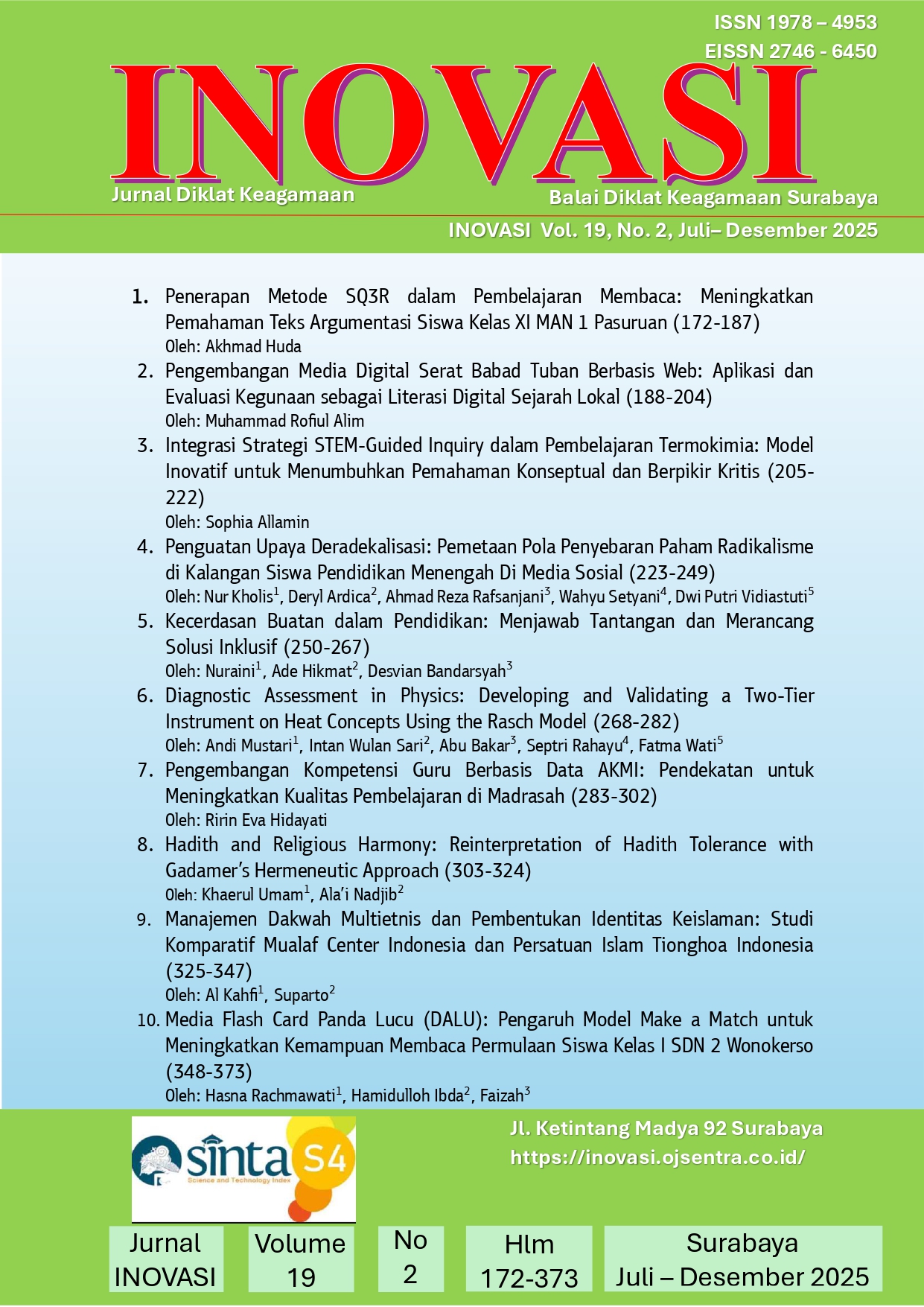
Artificial Intelligence in Education: Addressing Challenges and Designing Inclusive Solutions
DOI:
https://doi.org/10.52048/8bce5z83Keywords:
adaptive curriculum, AI literacy, artificial intelligence, digital education, learning transformationAbstract
The integration of Artificial Intelligence (AI) into education offers immense potential to transform learning processes through personalized content delivery, enhanced administrative efficiency, and instant feedback provision. However, its implementation faces significant challenges, including access and infrastructure disparities, ethical and privacy concerns, threats to the traditional role of teachers, and insufficient readiness of human resources and curricula. This article adopts a systematic literature review approach, analyzing publications from 2020–2024 sourced from reputable databases, focusing on identifying key challenges and strategic solutions. Findings indicate that successful AI adoption in education requires systemic strategies encompassing inclusive digital infrastructure investment, public–private partnerships, development of low-bandwidth AI platforms, enforcement of robust educational data protection policies, transparent and auditable AI design, and the integration of AI literacy into teacher training and national curricula. Teachers’ roles must be reconceptualized as collaborative facilitators who combine humanistic pedagogy with AI utilization. With an inclusive, ethical, and cross-sector collaborative approach, AI can serve as a powerful instrument for equitable, relevant, and sustainable educational transformation. This article aims to contribute theoretically to the development of AI-based education frameworks and provide practical guidance for policymakers, educators, and educational technology developers.
Downloads
References
Downloads
Published
Issue
Section
License
Copyright (c) 2025 Inovasi: Jurnal Diklat Keagamaan

This work is licensed under a Creative Commons Attribution 4.0 International License.